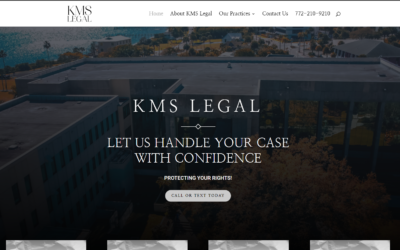
A local landing page should help someone in a specific market understand the service, decide whether the business fits, and take the next step. It should offer more than a city name inserted into generic copy.
1. State the service and market clearly
The opening should identify what the company provides and where it genuinely works. Avoid exaggerated phrases such as “number one” unless there is verifiable evidence and appropriate context.
2. Explain who the page helps
Describe the customers, property types, industries, or situations the service supports. A local landing page becomes useful when visitors can recognize their need—not when every resident receives the same broad message.
3. Add real local operating context
Include scheduling boundaries, service availability, consultation options, or other details that change by market. Do not invent neighborhood anecdotes, offices, travel times, or customers.

Each section should help a local visitor understand the fit and next step.
4. Provide service detail
Explain the problem, scope, process, important exclusions, and common decisions. Link to the main service page when readers need the broader offer.
5. Show verifiable proof
Use relevant projects, photographs, credentials, reviews with permission, and process information. If the business does not yet have proof from that city, use honest regional or company-wide evidence rather than pretending.
6. Answer local customer questions
Address questions about coverage, appointments, response times, remote work, estimates, or requirements when the answers are known. A short useful FAQ is stronger than a long block of city keywords.
7. Make the next step clear
Tell visitors what happens after they call or submit the form. A local landing page should identify the information the company needs and set reasonable expectations without making promises it cannot control.
8. Support mobile visitors
Use readable text, clear headings, appropriately sized images, tap-friendly phone links, and a form that does not demand unnecessary information. Local searches often happen while the customer is comparing options quickly.
9. Connect the page to the site
Link to services, projects, packages, related articles, and contact information. Google’s SEO Starter Guide recommends logical organization that helps people and search engines understand how pages relate.
10. Give the page a unique role
Compare the local landing page with regional, county, city, and service pages. If it answers the same intent with nearly identical text, strengthen the primary page instead of publishing another variation.
Local landing page review
- Does the local landing page contain information specific to the customer’s decision?
- Can every local statement and example be verified?
- Does the local landing page connect to relevant services and proof?
- Would the page remain useful if the city name appeared only a few times?
Research the page before writing
Begin with the service, market, and customer question the local landing page should own. Review the existing city, county, regional, and service pages for overlap. Search company records for real projects, photographs, service limitations, and questions that can be verified.
If the research does not reveal enough distinct information, improve the regional hub instead of forcing a new page. A page can be useful without mentioning every neighborhood, road, landmark, or ZIP code. The important test is whether a customer gains information that was not already available elsewhere on the site.
After drafting, compare the new local landing page side by side with the closest location page. Rewrite repeated sections, strengthen internal links, and confirm each page serves a different search and customer need.
Plan unique information before writing the page
Create a short source sheet for the market. Record the services genuinely offered there, how consultations or appointments work, verified projects or experience that may be referenced, common customer questions, important limitations, and the page that should receive the main call to action.
Mark every statement with its source. A claim may come from Tony, an approved project record, the company’s current service policy, or an existing page that has already been verified. If a local detail has no dependable source, leave it out or ask for confirmation.
Differentiate the page without manufacturing local color
A page does not need a paragraph about landmarks, weather, neighborhoods, or local history unless that information changes the service decision. Decorative location references often make a page longer without making it more useful.
Useful differentiation comes from operational truth. Examples include whether meetings can occur remotely or in person, which services are available, what information is needed for an estimate, relevant project types, or how the page connects to a county or Treasure Coast service structure.
Give proof enough context to matter
A logo wall or image gallery does not automatically explain why the business fits. Introduce project proof with the verified service, challenge, approach, and deliverable when those details are approved. Never attach a city to a project merely because the page targets that city.
If there is no city-specific project yet, say nothing that implies otherwise. Company-wide or regional work can still demonstrate capability when it is labeled honestly. The page can also explain process, ownership, communication, and support—details that help a prospect evaluate the business without pretending a local history.
Review the local landing page as a customer
Open the page from a phone and answer four questions: What does the company provide? Does it genuinely serve this area? What evidence supports the offer? What happens after contact? If any answer requires returning to search, strengthen the page or its internal links.
Recheck the page when services, contact information, operating boundaries, or proof changes. A useful local page is an maintained business resource, not a one-time search-engine asset.
Frequently asked questions
How long should a local page be?
Long enough to answer the decision clearly. There is no responsible universal word count. Remove repetition and add detail only when it helps the visitor.
Can one page target several nearby cities?
Yes. A well-structured regional or county hub may serve several markets better than multiple thin city pages.
Contact Del Vecchio to review whether your site needs a stronger hub, an improved city page, or fewer overlapping pages.