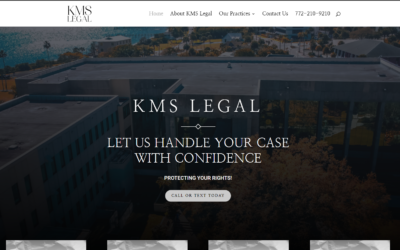
Website conversion means helping an appropriate visitor complete a valuable action, such as calling, requesting an estimate, booking a consultation, or submitting a useful form. It does not mean pressuring every visitor or measuring success by form volume alone.
1. Make the primary offer obvious
The opening should identify the service, customer, market, and next step. Remove vague slogans that force visitors to investigate before understanding the business.
2. Match the page to search intent
A visitor comparing providers needs different information from someone looking for emergency help. Organize each important page around the question and decision that brought the person there.
3. Use specific calls to action
“Request a website consultation” communicates more than “Submit.” Tell the visitor what happens after the click without promising an exact response time unless the business can meet it.

Conversion tracking should connect a clear customer action with a meaningful business outcome.
4. Show useful trust signals
Include real projects, clear ownership, accurate credentials, process details, service boundaries, and reviews used with permission. Avoid unsupported “best” or “number one” claims.
5. Answer buying questions
Explain fit, scope, responsibilities, timing factors, ongoing costs, and the next decision. Useful answers reduce unqualified inquiries and make serious prospects more confident.
6. Keep navigation predictable
Important services, proof, company information, and contact options should not be hidden behind clever labels. Make the primary path visible.
7. Check mobile calling
Phone numbers should be accurate, tap-friendly, and placed where a mobile visitor expects them. Test the actual link instead of assuming it works.
8. Shorten the form responsibly
Ask only for information needed to respond or qualify the opportunity. Explain required fields, error messages, and privacy expectations.
9. Improve page speed and stability
Large images, unnecessary scripts, and shifting layouts can interrupt the decision. Test the real page and prioritize problems affecting important actions.
10. Track calls and forms
Verify that analytics records meaningful submissions and phone actions. Test notifications so leads reach the correct person. Google’s guide to Analytics key events explains how important customer actions can be identified and reported.
11. Review lead quality
Marketing reports should distinguish a relevant sales opportunity from spam, job inquiries, vendor pitches, and poor-fit requests.
12. Improve one friction point at a time
Use recordings, analytics, form results, sales feedback, and customer questions when available. Del Vecchio’s services can connect design, messaging, tracking, SEO, advertising, hosting, and support.
Website conversion review
- Does the website conversion path match the page’s main intent?
- Can mobile visitors call or submit the form without friction?
- Does the website conversion action set clear expectations?
- Can the business measure qualified leads rather than raw clicks?
Use a responsible website conversion test
Choose one important page and one action. Record the current traffic source, device mix, call or form completions, and qualified-lead result when reliable tracking exists. Identify one specific friction point rather than changing the headline, form, layout, and offer at the same time.
Make the improvement, confirm tracking still works, and allow enough time for a meaningful comparison. Seasonal demand, advertising changes, staffing, and response time can affect outcomes. Website conversion decisions should combine analytics with sales feedback instead of treating every short-term movement as proof.
Document the change and what was learned. Even a test that does not improve results can prevent the team from repeating the same idea later.
Find the stage where qualified visitors get stuck
A weak website conversion result can come from several different stages. The traffic may be irrelevant, the page may not match the search or advertisement, the service explanation may be unclear, the proof may be weak, the contact action may fail, or the follow-up may be too slow to connect with the prospect.
Review the stages separately:
- Arrival: Did the visitor reach a page that matches the query, ad, profile, or referral?
- Understanding: Can the person identify the service, customer fit, area served, and main benefit?
- Evaluation: Are process, proof, responsibilities, and common questions available?
- Action: Can the visitor call or complete the form without technical or usability problems?
- Follow-up: Does the inquiry reach the correct person with enough information to respond?
This prevents a team from rewriting a headline when the real problem is a broken notification or poor traffic source.
Prioritize fixes by impact and confidence
Handle confirmed failures first: forms that do not arrive, wrong phone numbers, inaccessible buttons, missing service information, or mobile layouts that hide the action. These problems do not require a complicated experiment before correction.
Next, address high-friction decisions supported by customer feedback, sales questions, or reliable analytics. Examples include unclear package differences, missing location coverage, a form asking for unnecessary information, or an advertisement sending visitors to a generic home page.
Test subjective ideas after the essential path works. A button color, decorative animation, or minor wording change should not outrank a failed lead process.
Measure the complete business outcome
A form confirmation is useful, but it is not the final result. When possible, connect the submission to lead quality, service fit, response, appointment, proposal, or other appropriate sales stage. Keep personal data access limited to the people who need it.
Review results by landing page, source, device, and service when the sample is meaningful. A page that creates fewer but better inquiries may be more valuable than one that produces a large volume of spam or poor-fit requests.
A useful website conversion review should end with a short prioritized list: confirmed failures first, evidence-supported friction second, and lower-impact experiments last. That order keeps the team focused on changes customers can actually feel.
Document the baseline, the change made, and the result so each website conversion decision is based on evidence instead of guesswork.
Frequently asked questions
What is a good conversion rate?
There is no responsible universal target. It varies by source, service, offer, market, device, and lead definition. Compare trends using consistent tracking and qualified outcomes.
Should every page use the same call to action?
Not necessarily. The action should match the page and stage of the decision while still providing a clear contact path.
Contact Del Vecchio to review where qualified visitors may be getting stuck.